
Buying a car in India usually comes down to two financing options—car loan or personal loan.
Both work differently in terms of interest rate, EMI, eligibility, processing fees, and ownership conditions.
This complete car loan vs personal loan India guide compares both options using real numbers, Indian lending rules, and 2025 trends so you can choose confidently.
Why This Comparison Matters in 2025
With rising car prices and stricter bank lending norms, choosing the wrong loan can increase your total cost by ₹50,000–₹2 lakh.
Most buyers assume personal loans are easier—but overlook:
- Higher interest rates
- Shorter tenure
- No hypothecation benefits
This guide explains what suits your financial profile, not just generic advice.
Car Loan vs Personal Loan — Which Is Better?
A car loan is better for most buyers in India because it offers lower interest rates (8.7–10.5%), longer tenure, and higher loan amounts with 80–90% financing.
A personal loan suits buyers needing no hypothecation, faster approval, or purchasing used cars without paperwork issues.
What Is a Car Loan?
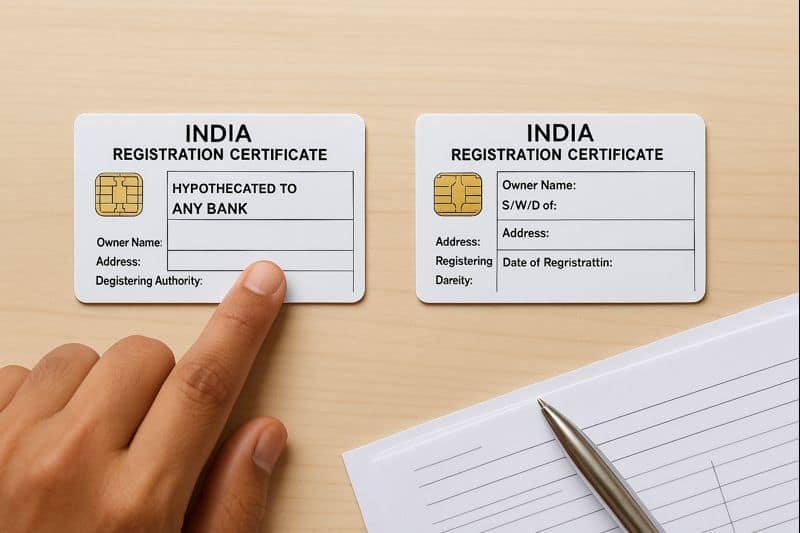
A car loan is a secured loan where the vehicle is hypothecated to the bank until full repayment.
Key Features
- Loan-to-Value (LTV): 80–90%
- Tenure: 1–7 years
- Interest type: Mostly fixed
- Lower risk = lower interest
Pros
- Lower EMI
- Higher loan eligibility
- Better for new cars
Cons
- RC shows hypothecation
- Insurance must be comprehensive
What Is a Personal Loan?
A personal loan is an unsecured loan—no asset is pledged as security.
Key Features
- Tenure: 1–5 years
- Loan amount: Based on income
- Higher interest due to higher risk
Pros
- No hypothecation
- Can be used for used or unregistered vehicles
- Faster approval
Cons
- Higher EMI
- Lower eligibility
- Stricter CIBIL requirement (750+)
Car Loan vs Personal Loan Interest Rate
| Loan Type | Interest Rate (2025) | Tenure | Notes |
| Car Loan | 8.7% – 10.5% | 1–7 years | Lower due to security |
| Personal Loan | 11% – 24% | 1–5 years | Higher risk pricing |
Private banks may offer pre-approved personal loans at lower rates for existing customers.
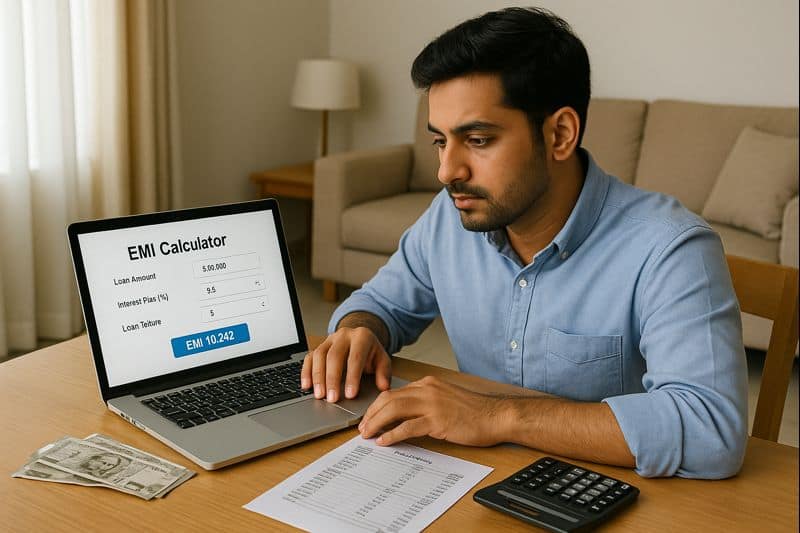
Car Loan vs Personal Loan EMI Calculator
EMI for ₹6 Lakh Swift Loan at 9% (Car Loan)
| Loan Amount | Interest Rate | Tenure | Monthly EMI |
| ₹6,00,000 | 9% | 60 months | ₹12,437 approx |
EMI for ₹6 Lakh at 14% (Personal Loan)
| Loan Amount | Interest Rate | Tenure | Monthly EMI |
| ₹6,00,000 | 14% | 60 months | ₹13,947 approx |
Difference in Total Interest Paid
| Loan Type | Total Interest |
| Car Loan @ 9% | ~₹1.46 lakh |
| Personal Loan @ 14% | ~₹2.37 lakh |
Personal loan costs ₹90,000+ more for the same ₹6 lakh amount.
Which Is Better for Used Cars?
Best Option Depends On:
- Car loan approval difficulty
- RC transfer delay
- Age of vehicle
Used car loans come with:
- Higher interest (10.5–18%)
- Lower LTV (50–70%)
When Personal Loan Is Better
- Buying from individual seller
- No RC transfer immediately
- Old car (>8 years) rejected by bank
Car Loan vs Personal Loan — Feature Comparison Table
| Feature | Car Loan | Personal Loan |
| Security | Car hypothecated | No collateral |
| Interest Rate | Lower | Higher |
| Approval Speed | Moderate | Fast |
| Documentation | More | Less |
| Tenure | Up to 7 yrs | Up to 5 yrs |
| Down Payment | Required | Not required |
| Use Case | New & used cars | Any purpose |
| RC Impact | Hypothecation | No impact |

Eligibility Comparison
Car Loan
- CIBIL 700+
- Salary: ₹15,000–₹25,000+
- Self-employed: ITR (2 years)
- Job stability: 1 year minimum
Personal Loan
- CIBIL 750+ preferred
- Higher income requirement
- Past defaults reduce approval sharply
RBI note: Hard inquiries affect score—avoid multiple applications.
Documents Required
Car Loan
- Aadhaar + PAN
- Income proof
- Bank statements
- Address proof
- RC & insurance post approval
- Hypothecation entry at RTO
Personal Loan
- Aadhaar + PAN
- Salary slips (3 months)
- Bank statements (6 months)
- No vehicle documents needed
Pros & Cons Summary
Car Loan Pros
- Lower EMI
- Higher loan amount
- Better for long-term ownership
Car Loan Cons
- Hypothecation on RC
- Insurance cost higher
Personal Loan Pros
- No down payment
- Use for any car, even old or unregistered
Personal Loan Cons
- Higher interest
- Shorter tenure increases EMI
Car Loan vs Personal Loan — How to Decide
Choose Car Loan if:
- You are buying a new or certified used car
- Want lower EMI and total cost
- Have CIBIL 700+
Choose Personal Loan if:
- Buying from an individual seller
- Car is older than 8 years
- Need urgent approval without RC paperwork
General Rules
- Keep EMI under 25% of monthly income
- Avoid 7-year tenure unless necessary
- Increase down payment to reduce interest
Conclusion:
A car loan is the smarter and more affordable choice for most Indian buyers. A personal loan is useful only in specific cases like old used cars or urgent funding needs.
FAQ:
Q. Car loan vs personal loan in India — which is better?
A. For most buyers, a car loan is the better option because it offers lower interest rates (around 8.7%–10.5%), a higher loan amount, and a longer repayment tenure. Personal loans are suitable mainly if you want no RC hypothecation or are purchasing an older used car.
Q. Can I use a personal loan to buy a car?
A. Yes, you can use a personal loan to buy a car, and it does not require RC hypothecation. However, personal loans carry higher interest rates, which increases the overall cost of buying the car.
Q. Which loan has a lower EMI car loan or personal loan?
A. A car loan usually has a lower EMI because it comes with lower interest rates and longer tenure, which can go up to 7 years.
Q. Can I get a car loan without a down payment?
A. Zero down payment car loans are rare and are mostly offered by NBFCs at higher interest rates. Most banks typically require a down payment of 10–25% of the car’s on-road price.