
Selling your car in India is not complete until the RC (Registration Certificate) ownership is officially transferred to the buyer.
Many sellers think handing over the keys and signing a delivery note is enough — but legally you remain responsible until the RC transfer is updated in the RTO records.
This step-by-step guide explains how to transfer RC ownership in India, documents required, fees, timelines, online Parivahan process, two-wheeler transfer, and common mistakes to avoid — using simple Indian English.
Why RC Transfer Matters in India
In India, the RC legally defines who owns the vehicle — not the insurance, not the delivery note.
Until the RC is updated:
- You are liable for challans
- Third-party accident claims may apply to you
- Pending taxes remain in your name
- Insurance cannot be transferred properly
- Selling price disputes may arise
So completing RC transfer protects both buyer and seller, and ensures smooth legal ownership.
RC Ownership Transfer in India
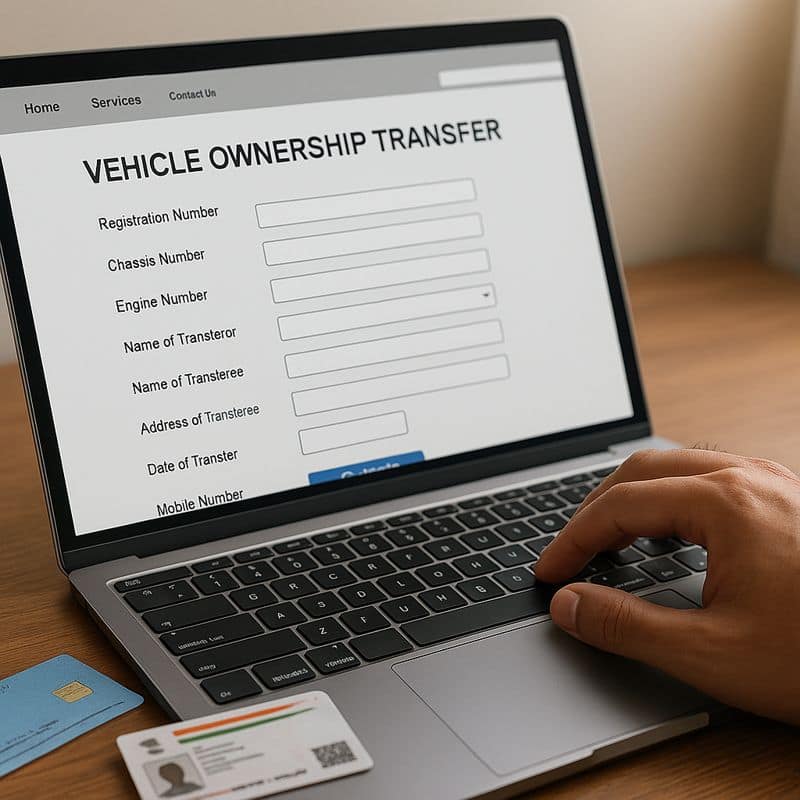
To transfer RC ownership in India, submit Form 29 & 30, insurance, pollution certificate, buyer ID/address proof, and the original RC to the RTO within 14 days (same state) or 45 days (inter-state). Fees range from ₹350–₹750, and approval takes 15–30 days.
Types of RC Ownership Transfer in India
There are three categories:
1) Normal Sale Transfer
- Selling your car to another person in same state
2) Inter-State Transfer
- Buyer lives in another state
- Requires NOC from original RTO (Form 28)
3) Inheritance / Death Case Transfer
- Requires death certificate + succession documents
Most buyers fall under normal sale, covered in this guide.
Documents Required for RC Transfer
From Seller
- Original RC
- Form 29 & 30 (signed)
- Valid insurance copy
- Recent pollution certificate (PUC)
- PAN (if required for high-value sale)
From Buyer
- Address proof (Aadhaar / Passport / Voter ID)
- ID proof (Aadhaar / PAN)
- Passport-size photographs
- Form 20 (for re-registration if inter-state)
- NOC from bank (if hypothecation removed)
If loan existed (Hypothecation)
- Form 35
- Bank NOC
- Loan closure letter
❗ Important Rule
As per Motor Vehicles Act, RC transfer must be applied within 14 days for same-state transfer.
Step-by-Step: How to Transfer RC Ownership in India
Follow this exact sequence:
Step 1: Create Delivery Note at Time of Sale
- Write date & time of handover
- Take buyer’s ID proof
- Keep a signed copy for safety
This protects seller from post-sale liability.
Step 2: Apply for RC Transfer
Online Method (Parivahan Portal)
Suitable for most states including Delhi, MH, KA, TN, UP etc.
Process:
- Visit Parivahan → “Vehicle Related Services”
- Select RTO based on original registration
- Choose Transfer of Ownership
- Enter vehicle details & chassis number
- Upload documents
- Pay online fees
- Book appointment (if required)
- Submit originals at RTO
Track status online (explained later)
Offline Method
Required in some RTOs or West Bengal where partial online support exists.
Steps:
- Collect Form 29 & 30 from RTO
- Attach documents
- Submit at counter
- Collect acknowledgment slip
Step 3: Pay Vehicle Ownership Transfer Online Fees
Typical Fee Range (2025 Updated)
| Vehicle Type | Transfer Fee (₹) |
| Two-wheeler | 350–500 |
| Car (LMV) | 450–750 |
| Smart card issue | 200–300 |
| Postal charges | 50–100 |
Additional Costs
- HP removal: ₹150
- Road tax difference (inter-state re-registration)
⚠ No agent is legally required — RTO fees are fixed.
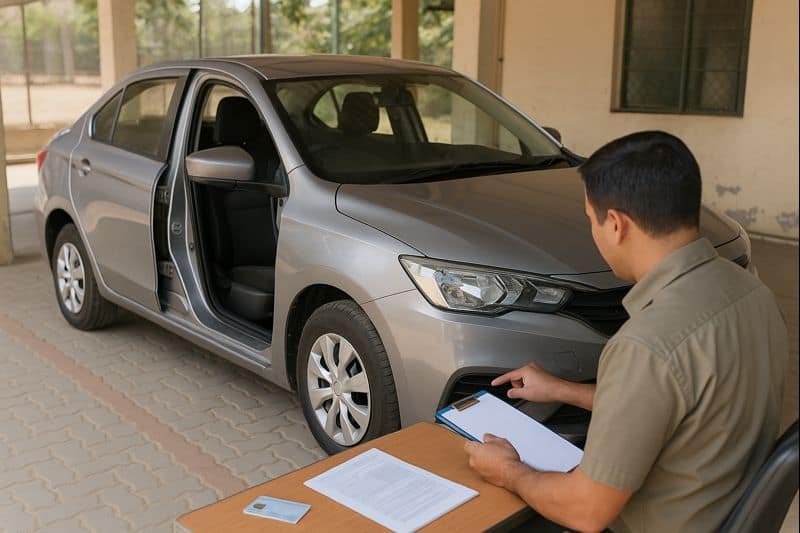
Step 4: Submit Documents & Vehicle for Verification
- Some RTOs require physical inspection
- Chassis number stamping may be needed
- Keep original RC handy
Step 5: Track Parivahan Ownership Transfer Status
How to Check Status
- Visit Parivahan → “Know Your Application Status”
- Enter application number
- View approval stage & expected timeline
Status stages may show:
- Pending at RTO
- Verification completed
- Smart card printed
- Dispatched
Delivery Time
- Same state: 15–30 days
- Inter-state: 45–90 days
Smart card arrives by speed post.

Two-Wheeler Ownership Transfer Online
The process is the same as car transfer, but fees are lower.
Two-Wheeler Ownership Transfer Fees (2025)
| State Type | Fees (₹) |
| Same-state transfer | 350–450 |
| HP removal | 150 |
| Smart card | 200–300 |
Documents Required:
- RC
- Form 29 & 30
- PUC
- Insurance
- Buyer ID/address proof
- Passport-size photos
Most states allow fully online two-wheeler transfer.
Vehicle Ownership Transfer Online – West Bengal Note
West Bengal has partial online support.
Process:
- Apply online on Parivahan
- Upload documents
- Take printout & submit physically at RTO
- Pay fees at counter (if online is not enabled)
Carry all originals to avoid repeat visits.
Insurance & RC Transfer – Important Rules
Ownership transfer is not complete until insurance is updated
Buyer must:
- Apply for insurance transfer within 14 days
- Submit RC copy + sale documents
If NOT updated:
- Claims may be rejected
- Third-party liability remains on seller
As per IRDAI, only third-party cover continues automatically for 14 days — own damage does NOT.
Loan & Hypothecation Removal
When selling a car bought on EMI:
- Check RC for HP (hypothecation) entry
- Clear loan before transfer
- Obtain NOC + Form 35 from bank
- Submit to RTO
Bank Processing Time
- SBI / HDFC / ICICI / Axis: 7–15 working days
HP Removal Fees
| Process | Cost (₹) |
| Hypothecation removal | 150 |
| Smart card reissue | 200–300 |
Without HP removal, RC transfer cannot be completed.
Why Timely RC Transfer Saves Money
Real Example
If the buyer gets:
- Traffic challan
- Toll violation
- Accident claim
- Road tax due
And RC is still in seller’s name → legal responsibility stays with seller.
Sample EMI Table
| Loan Amount | Interest Rate | Tenure | Monthly EMI |
| ₹4,00,000 | 12% APR | 4 years | ₹10,537/month |
Notes:
- CIBIL score 700+ gives lower interest
- Processing fees: ₹2,000–₹4,500
- Down payment varies by bank
Used car loans offered by:
- HDFC Bank
- ICICI Bank
- SBI
- Kotak
- Tata Capital
Pros & Cons of Online RC Ownership Transfer
| Pros | Cons |
| No agent required | Some states still require physical visit |
| Track status online | Document upload issues can delay |
| Fixed fees | Inter-state process takes longer |
| Faster processing | Original RC needed |
Common Mistakes to Avoid
- Not informing insurer after sale
- Driving without insurance transfer
- Submitting incomplete forms
- Incorrect signatures on Form 29 & 30
- Not keeping delivery note
- Selling car with active challans
- Delaying hypothecation removal
Always clear pending challans before applying.
Conclusion:
Transferring RC ownership in India is not complicated when you follow the correct step-by-step process and submit complete documents.
Whether you are selling or buying a used vehicle:
- Apply within 14 days
- Update insurance immediately
- Track status online
- Remove hypothecation if loan was active
Completing RC transfer protects you legally and financially — and ensures smooth ownership for the next buyer.
FAQs
Q. How to transfer RC ownership in India?
A. To transfer RC ownership, submit Form 29 and Form 30, original RC, valid insurance, PUC certificate, and the buyer’s ID and address proof to the RTO within 14 days of sale. You must also pay the applicable transfer fees. For same-state transfers, processing usually takes 15–30 days.
Q. What are vehicle ownership transfer fees in India?
A.
Two-wheelers: ₹350–₹500
Cars: ₹450–₹750
Smart card RC issuance: Additional ₹200–₹300
Fees may vary slightly by state.
Q. How to check Parivahan ownership transfer status?
A. Visit the Parivahan website, go to “Know Your Application Status”, enter your application number, and track stages such as verification, RC printing, and dispatch.
Q. Can RC transfer be done online?
A. Yes. Most states allow online RC transfer through Parivahan. However, in some regions, you may still need to submit physical documents at the RTO.
Q. Is FIR needed for RC transfer?
A. An FIR is required only if the original RC is lost or in case of theft. For normal ownership transfer, an FIR is not required.
Q. How long does RC transfer take in India?
A.
Same-state transfer: 15–30 days
Inter-state transfer: 45–90 days, depending on NOC clearance and verification