
Owning a car in India goes far beyond the showroom price. The car ownership cost india in 2025 includes EMI, fuel, insurance, servicing, tyres, battery, parking, and unexpected repairs.
Most first-time buyers underestimate long-term expenses, leading to financial stress later.
This complete guide breaks down monthly and yearly cost of owning a car in India, using real Indian examples, IRDAI and RTO-based facts, and practical calculations.
What Is Car Ownership Cost in India?
Car ownership cost is the total money you spend to use and maintain a car over its lifetime—not just buying it.
It includes:
- On-road price + Down payment
- EMI (if financed)
- Insurance (annual premium)
- Fuel cost
- Maintenance & servicing
- Tyres, battery replacement
- RC-related charges
- Depreciation & resale loss
Direct Answer (AEO):
The average car ownership cost India per month in 2025 ranges between ₹10,000 – ₹22,000, depending on the segment, fuel type, and loan.
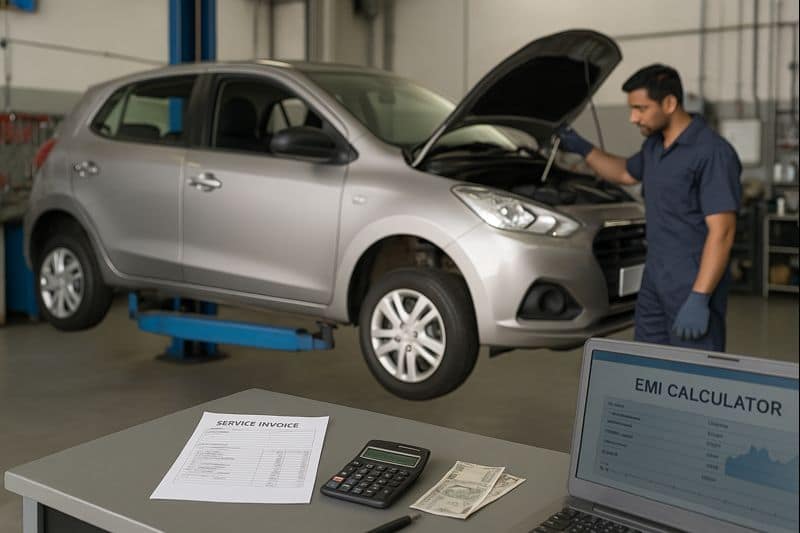
Car Ownership Cost Breakdown in India
1. On-Road Price Components
On-road price includes:
- Ex-showroom price
- GST (28% + cess for >1200cc petrol / >1500cc diesel)
- Registration (RTO) charges
- Road tax (varies by state)
- Fastag + number plate
- Insurance
2. EMI Cost (If Loan Taken)
Most Indian buyers take car loans with 80–90% LTV.
EMI Example (Real-World)
| Loan Amount | Interest Rate | Tenure | Monthly EMI |
| ₹6,00,000 | 9% | 60 months | ₹12,437 approx |
Total interest paid: ~₹1.46 lakh
Annual Ownership Cost Example — Petrol Hatchback
5-Year Ownership Projection
| Year | Service Cost | Insurance | Maintenance | Total |
| 1 | ₹4,000 | ₹22,000 | ₹2,000 | ₹28,000 |
| 2 | ₹6,000 | ₹20,000 | ₹3,000 | ₹29,000 |
| 3 | ₹8,000 | ₹18,000 | ₹5,000 | ₹31,000 |
| 4 | ₹9,000 | ₹16,000 | ₹6,000 | ₹31,000 |
| 5 | ₹10,000 | ₹14,000 | ₹7,000 | ₹31,000 |
5-Year Total: ~₹1.5 lakh (excluding fuel & EMI)
Monthly Cost of Owning a Car in India
Example: Petrol Hatchback, 1,000 km/month
| Expense Type | Monthly Approx Cost |
| EMI | ₹12,500 |
| Fuel (18 kmpl @ ₹105/ltr) | ₹5,830 |
| Insurance (spread monthly) | ₹1,700 |
| Service/Maintenance | ₹800 |
| Parking/Car Wash | ₹500 |
| Total Monthly Cost | ₹21,330 |
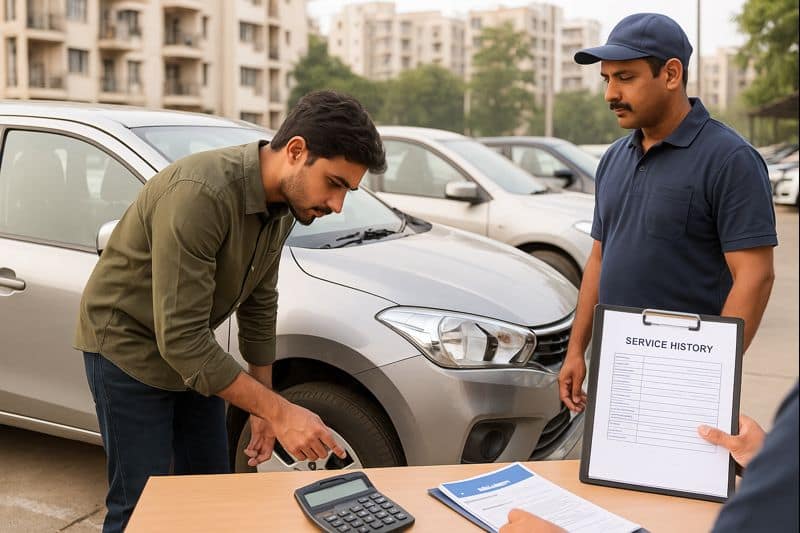
New vs Used Car Ownership Cost in India
Used Car Cost Differences (2025)
| Expense Type | New Car | Used Car |
| Interest Rate | 8.7–10.5% | 11–16% |
| Insurance | Higher (IDV high) | Lower (IDV reduced) |
| Maintenance | Lower (initial years) | Higher (wear & tear) |
| RC Transfer | Not required | ₹600–₹5,000 depending on state |
Used Car EMI Example
| Loan Amount | Interest Rate | Tenure | Monthly EMI |
| ₹4,00,000 | 12.5% | 48 months | ₹10,638 approx |
Insurance Cost in Car Ownership
Types of Insurance
- Third-party (mandatory)
- Comprehensive (recommended)
- Add-ons:
- Zero-Dep
- Engine Protect
- Consumables
- Return to Invoice
Average Annual Premiums (2025)
| Car Type | Annual Insurance Cost |
| Hatchback | ₹14,000 – ₹22,000 |
| Sedan | ₹20,000 – ₹32,000 |
| SUV | ₹28,000 – ₹55,000 |
Fuel Cost in Car Ownership
Fuel Cost Formula
Monthly fuel cost = (Monthly km ÷ mileage) × fuel price
Example:
- Distance: 1,000 km/month
- Mileage: 18 kmpl
- Petrol price: ₹105/litre
Calculation:
1000 ÷ 18 = 55.5 litres × ₹105 ≈ ₹5,830/month

Maintenance & Repair Costs in India
Typical Expenses (5-Year Horizon)
| Component | Expected Cost |
| Battery replacement (3–4 years) | ₹4,000 – ₹8,000 |
| Tyres (40,000–50,000 km) | ₹12,000 – ₹32,000 |
| Brake pads | ₹2,000 – ₹6,000 |
| Clutch overhaul | ₹8,000 – ₹18,000 |
| AC servicing | ₹2,000 – ₹4,000 |
Hidden Ownership Costs in India
- Parking fees (₹500–₹2,000/month)
- Fastag recharge
- Wheel alignment/balancing
- PUC certificate renewal
- RC smart card reissue
- Traffic fines
- Toll charges
Depreciation & Resale Value
Cars lose value from day one.
Average Depreciation Rate
| Age of Car | Value Drop |
| 1 year | 10–15% |
| 3 years | 25–35% |
| 5 years | 40–55% |
| 8+ years | 60–70% |
How to Reduce Car Ownership Costs in India
- Choose fuel-efficient models
- Maintain a CIBIL score above 750 for lower EMI interest
- Avoid unnecessary add-ons at the dealership
- Renew insurance before expiry
- Drive smoothly to increase mileage
- Compare premiums across insurers
- Follow the service schedule to retain the warranty
Pros & Cons of Owning a Car in India
Pros:
- Convenience and safety
- Freedom for family & travel
- Long-term asset (with resale value)
Cons:
- High monthly expense
- Rapid depreciation
- Parking and traffic challenges
Conclusion:
Owning a car is not just a one-time purchase—it’s a recurring commitment. Before buying, calculate your total cost of ownership, keep EMI affordable, and always plan for fuel and maintenance.
FAQ:
Q. What is the average car ownership cost in India per month?
A. For most Indian car owners, the average monthly cost ranges between ₹12,000 and ₹22,000. This includes EMI, fuel, insurance, servicing, and basic maintenance. The actual cost depends on factors like the type of car, loan amount, city, fuel prices, and annual driving distance.
Q. Is owning a car cheaper than using cabs in India?
A. Owning a car becomes cost-effective only if your monthly usage is around 800–1,200 km or more. If your usage is lower, cabs, ride-sharing, or car subscription plans may be cheaper due to the high fixed costs involved in car ownership.
Q. How much does a used car cost to maintain in India?
A. Used cars usually have higher maintenance costs, with annual expenses ranging from ₹25,000 to ₹45,000. The exact cost depends on the car’s age, service history, replacement of wear-and-tear parts, and brand.
Q. When should I sell my car to minimize loss?
A. The best time to sell a car is usually between 5 to 7 years of ownership. During this period, depreciation slows down while maintenance costs remain manageable. After 8 years or more, resale value tends to drop sharply.