Zero depreciation insurance—popularly called zero-dep or bumper-to-bumper cover—is one of the most asked-about add-ons among Indian car buyers.
With repair costs increasing every year, the big question is:
Is zero depreciation insurance worth it in India, or is it just an extra premium?
This complete guide explains what zero-dep really covers, how long it is allowed, whether you should buy after 5 years, real claim examples, and IRDAI-based rules—using simple Indian English.
Why Zero-Dep Is a Big Decision in India
Most Indian buyers focus only on the premium price, not the claim amount they may have to pay later.
Modern cars have:
- Expensive plastic bumpers
- Alloy wheels
- LED headlamps
- Sensors & ADAS components
Even a minor parking accident can cost ₹10,000–₹30,000.
Zero-dep prevents out-of-pocket shock expenses, but it comes at an extra cost and has specific eligibility rules set by insurers under IRDAI guidelines.
So before you buy, you must understand when it’s useful and when it’s not.
What Is Zero Depreciation Insurance in India?
Zero depreciation insurance in India is an add-on cover that ensures the insurer pays 100% of the cost of replaced parts during a claim without deducting depreciation on plastic, metal, or fibre components. You only pay compulsory deductibles and non-covered items like consumables.

How Does Zero-Dep Work?
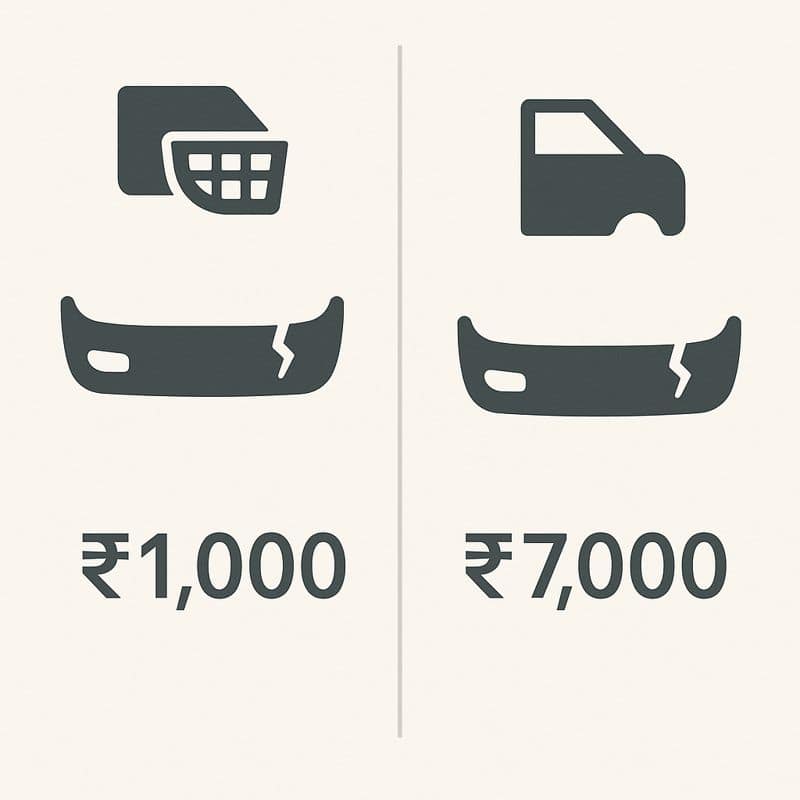
Accidental Repair Bill Example – Swift Petrol
| Cost Component | Amount (₹) |
| Front bumper (plastic) | 12,000 |
| Headlamp | 8,000 |
| Labour | 3,000 |
| Total bill | 23,000 |
Without Zero-Dep (Normal Comprehensive)
| Deduction Type | Amount (₹) |
| Plastic depreciation (50%) | 6,000 |
| Labour (100% covered) | 0 |
| Compulsory deductible | 1,000 |
| Customer pays | ₹7,000 |
With Zero-Dep
| Deduction Type | Amount (₹) |
| Depreciation | 0 |
| Compulsory deductible | 1,000 |
| Customer pays | ₹1,000 |
Savings with zero-dep: ₹6,000 in one claim
This is why zero-dep is preferred for new cars, city drivers, and expensive spare parts.
Zero Depreciation Car Insurance for How Many Years?
Most insurers allow zero-dep for up to 5 years from the car’s registration date.
After 5 years in India:
- Some insurers extend up to 7–8 years, but only after inspection
- Premium becomes higher
- Claim limits may apply
Why insurers restrict zero-dep:
- Higher repair probability in older cars
- Wear-and-tear increases
- IRDAI allows insurers to set risk-based eligibility
What Is Zero Depreciation in Bike Insurance?
Zero depreciation in bike insurance works the same way as car zero-dep, covering 100% cost of replaced parts without depreciation deductions. It is most useful for new bikes, premium motorcycles, and city riders, usually available for up to 3–5 years.
How Much Extra Does Zero-Dep Cost in India?
Typical Additional Premium Range
- Small cars: ₹2,000–₹4,000/year
- Sedans & compact SUVs: ₹4,000–₹7,000/year
- Premium SUVs: ₹8,000–₹15,000/year
Factors affecting cost:
- City (Tier-1 higher risk)
- Car value (IDV)
- Age of vehicle
- Claim history
- Add-ons clubbed (engine protect, NCB protect, consumables)

Zero Depreciation Insurance India Calculator
Zero-Dep Premium ≈ 10–20% of Own Damage Premium
Example (Honda Amaze, Year-1)
| Component | Amount (₹) |
| Base OD premium | 9,000 |
| Zero-dep add-on @ 18% | 1,620 |
| GST | 292 |
| Total extra cost | ₹1,912/year |
If you claim even once, savings outweigh cost.
What Zero-Dep Covers & Doesn’t Cover
Covered
- Plastic parts
- Metal body panels
- Fibre components
- Glass parts
- Paint & labour (varies by insurer)
- Alloy wheels (partial or full depending on policy)
Not Covered
- Engine hydro-lock (unless engine protect add-on)
- Tyre damage (unless add-on)
- Routine wear-and-tear
- Mechanical breakdown
- Drunk driving or invalid DL
- Consequential damage (driving after accident)
Zero-Dep Claim Limit Rules in India
Most insurers allow:
- 2 claims per year OR
- Limit based on policy wording
Always check:
- Add-on policy terms
- Max number of zero-dep claims
- Claim approval conditions
Who Should Buy Zero Depreciation Cover?
Recommended For:
- New cars (0–5 years)
- Cars under loan/EMI
- First-time drivers
- High-traffic city users (Delhi, Mumbai, Bangalore)
- Premium cars with expensive parts
- CVT / DCT automatic cars
Not Recommended For:
- Cars older than 6–8 years
- Very low-usage owners
- Cars with low IDV and low market value
- Planning to sell within a year

Ownership Cost Example With & Without Zero-Dep
| Year | Insurance Without Zero-Dep (₹) | Insurance With Zero-Dep (₹) | Claim Expense (₹) | Total Annual Cost (₹) |
| 1 | 18,000 | 21,000 | 0 | 21,000 |
| 2 | 17,000 | 20,000 | 6,000 saved | 20,000 |
| 3 | 16,000 | 19,000 | 0 | 19,000 |
Break-even achieved even with one claim in 3 years.
Why Zero-Dep Matters for Loan Buyers
If your car is on EMI:
- Insurance is often mandatory till loan ends
- Zero-dep avoids sudden repair expenses during EMI
- Prevents out-of-pocket spending when cash flow is tight
EMI Example (Swift, ₹6 lakh loan)
| Loan Amount | Interest Rate | Tenure | Monthly EMI |
| ₹6,00,000 | 9% APR | 5 years | ₹12,438/month |
Unexpected ₹10,000 repair can disturb monthly budgets → zero-dep prevents this.
Zero-Dep & RC Transfer Rules for Used Cars
When buying a used car:
- Zero-dep continues only after policy endorsement
- Insurance must be transferred within 14 days
- RC transfer proof required by insurer
If policy not transferred:
- Claims may get rejected
IRDAI guideline: Policy must match the correct owner details.
Pros & Cons of Zero Depreciation Insurance
Pros
- Higher claim approval value
- No depreciation cuts
- Best for new & premium cars
- Saves big repair costs
- Peace of mind during EMI
Cons
- Higher premium
- Claim limits may apply
- Not available after certain vehicle age
- Not useful for low-value cars
Tips to Choose Zero-Dep Smartly in India
- Compare IDV, not lowest price
- Add engine protect if in flood-prone cities
- Avoid unnecessary add-ons (key loss, RSA duplication)
- Renew zero-dep before expiry
- Check claim limit per year
- Prefer insurers with wide cashless network
Top insurers offering zero-dep:
- HDFC ERGO
- ICICI Lombard
- Tata AIG
- SBI General
- Bajaj Allianz
- Reliance General
Conclusion: Should You Buy Zero-Dep in India?
If your car is new, financed, or used regularly, zero depreciation insurance is absolutely worth it.
It saves major repair costs and protects your budget—especially during EMI years.
For cars older than 6–8 years, switching to standard comprehensive + NCB protection may be more practical.
FAQs:
Q. What is zero depreciation insurance in India?
A. Zero depreciation insurance covers 100% of the replacement cost of damaged parts without applying depreciation. This means you only pay the compulsory deductibles during a claim. It is most useful for new cars up to 5 years old.
Q. Is zero-depreciation insurance available after 5 years in India?
A. Generally, no. However, some insurers may offer zero-dep cover for cars up to 7–8 years old after a vehicle inspection. The premium and restrictions usually increase with the car’s age.
Q. Is zero-dep insurance worth buying?
A. Yes, especially if your car is under 5 years old, used frequently in city traffic, or has expensive parts. In many cases, a single claim can recover the extra premium paid over 4–5 years.
Q. How many times can I claim zero-depreciation insurance in a year?
A. Most insurers allow up to 2 zero-dep claims per policy year, though the exact limit depends on the insurer’s add-on terms and conditions.
Q. Does zero-depreciation insurance cover engine damage?
A. No. Engine damage is not covered under zero-dep insurance. For that, you need to purchase a separate engine protect add-on, which is especially useful in flood-prone areas.